

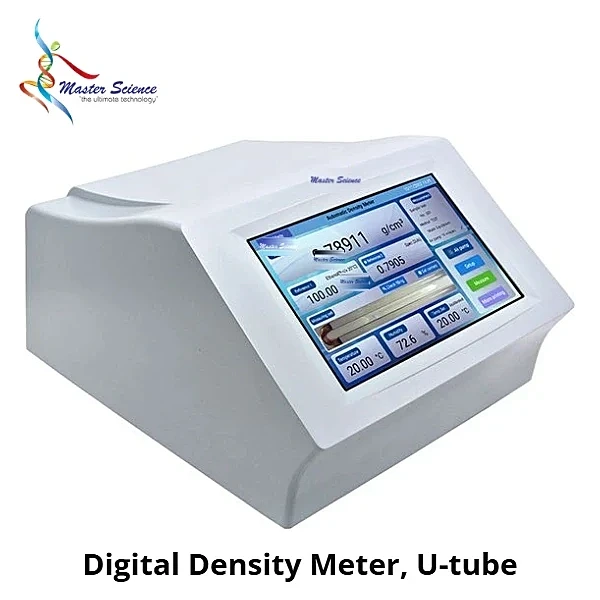
Digital Density Meter - U-tube Oscillating Densitometer - 0-3 g/cm³ - ±0.0001 g/cm³
Inhouse product
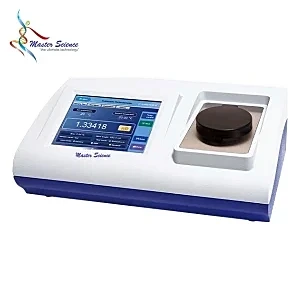
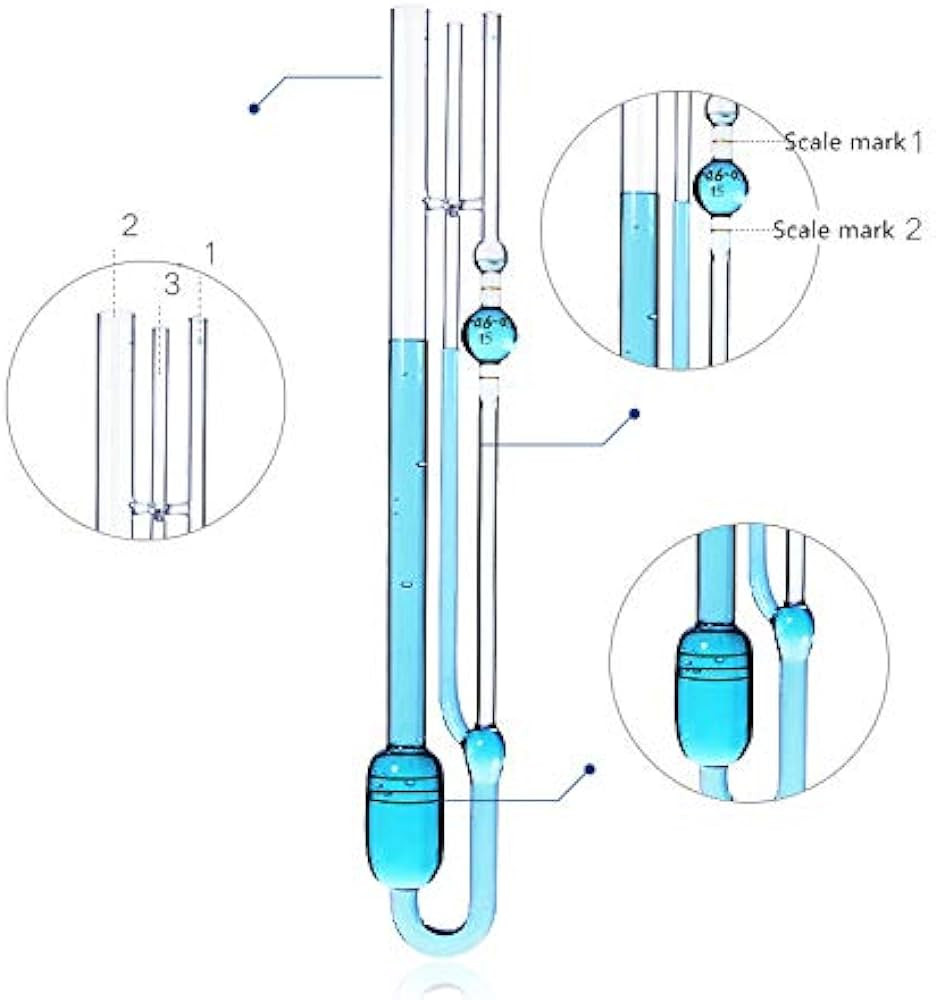
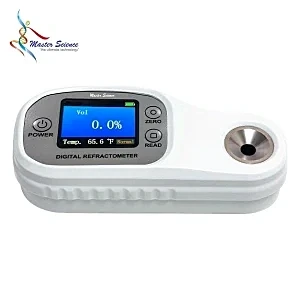
The Master Science Digital Density Meter determines liquid density and specific gravity by the oscillating U-tube method. A small sample of about 2 to 3 mL is drawn into a quartz glass tube, and the change in its vibration frequency is converted into density at a precisely controlled temperature.
A 10.1-inch Android touchscreen with step-by-step SOPs, live HD camera view of the U-tube and an integrated peristaltic pump for automatic filling and cleaning make routine work quick and consistent.
Technical Specifications
The Master Science Digital Density Meter is supplied in three models. Main specifications:
- Brand: Master Science
- Model Number: MSDM-3005SWISS, MSDM-3005ASWISS, MSDM-3004SWISS
- SKU: MSDM-3005SWISS, MSDM-3005ASWISS, MSDM-3004SWISS
- Models: MSDM-3005SWISS, MSDM-3005ASWISS, MSDM-3004SWISS
- Density Range: 0 to 3 g/cm³
- Density Accuracy: ±0.0001 (3005), ±0.0003 (3005A), ±0.0005 g/cm³ (3004)
- Density Repeatability: ±0.00005 (3005), ±0.0001 (3005A), ±0.0002 g/cm³ (3004)
- Density Resolution: 0.00001 (3005); 0.0001 g/cm³ (3005A, 3004)
- Temperature Range: 5 to 70 °C (3005, 3005A); 5 to 50 °C (3004)
- Temperature Accuracy: ±0.05 °C (3005, 3005A); ±0.1 °C (3004)
- Temperature Resolution: 0.01 °C
- Measuring Units: Density, specific gravity at 4/20/25 °C; 30+ scales incl. alcohol, API, Brix, urea (3005)
- Sample Filling: Manual or automatic with peristaltic pump
- Fill Check: 1080p HD camera with video and photo
- Calibration: Dry air and distilled water; multi-point
- Drying: Built-in DC air pump with drying column
- Pressure Compensation: Built-in barometric sensor
- U-tube: Quartz glass
- Minimum Sample: About 2 to 3 mL
- Temperature Control: Peltier with platinum resistance sensor and PID
- Display: 10.1-inch color touchscreen, Android
- Storage: 128 GB; up to 200,000 results
- User Management: Four levels, electronic signature, optional audit trail (3005, 3005A)
- Interfaces: RS232, USB, RJ45 (3004: RS232, USB); PC and LIMS connection
- Reports: PDF and Excel
- Power Supply: AC 100 to 240 V, 50/60 Hz, 120 W
- Dimensions (L × W × H): 439 × 350 × 217 mm
- Net Weight: 12 kg (3005, 3005A); 8.5 kg (3004)
Key Benefits
- Bubble-free results: the HD camera shows the U-tube during filling, so air bubbles are spotted before measuring.
- Precise temperature: Peltier control holds the cell within hundredths of a degree for stable density values.
- Higher throughput: the Master Science Digital Density Meter fills, measures and cleans automatically with its peristaltic pump.
- Standards compliant: methods follow ASTM D4052, D5002, D3505, ISO 12185, IP 559 and pharmacopoeias.
- Data integrity: user levels, electronic signatures and optional audit trail support regulated labs.
Many labs measure refractive index alongside density using the Master Science automatic refractometer.
Product Features
Measurement
- Oscillating quartz U-tube
- Fast and accurate measurement modes
- Automatic barometric compensation
- Multi-point calibration with air and water
Operation
- 10.1-inch Android touchscreen with built-in SOPs
- 1080p camera view of the measuring cell
- Manual or pump-assisted filling and cleaning
Data and Connectivity
- 128 GB storage, up to 200,000 results
- PDF and Excel reports
- RS232, USB and Ethernet; LIMS connection
- Optional thermal, stylus or Wi-Fi printer
Applications
The Master Science Digital Density Meter is used in:
- Beverages – sugar concentration and soft drink QC
- Breweries and distilleries – alcohol content
- Petrochemicals – API gravity of crude oil and fuels
- Pharmaceutical raw materials and preparations
- Chemicals, flavours, fragrances and metalworking fluids
Optional Accessories
- Thermal, stylus or Wi-Fi printer
- Audit trail software (MSDM-3005SWISS, MSDM-3005ASWISS)
Common Laboratory Problems and How This Density Meter Helps
How the Master Science Digital Density Meter addresses typical density testing problems:
- Hidden air bubbles: camera inspection confirms a clean fill.
- Temperature drift: Peltier control keeps conditions stable.
- Operator-to-operator variation: automatic filling and SOPs standardise the process.
- Exposure to hazardous liquids: pump injection reduces handling.
- Manual unit conversions: more than 30 built-in scales give the needed result directly.
Frequently Bought Products
"Explore Master Science, your trusted provider of high-quality laboratory equipment and innovative solutions. Discover our extensive range of analytical instruments and exceptional customer support, all dedicated to empowering scientific discovery across industries. Join us in advancing research and setting new standards globally."